Butter Cookie Compliance Guide: Certification, Standards & Imported Ingredient Rules
Date: 2026-10-05 Categories: FAQ Hits: 897
Butter Cookie Compliance Guide: Certification, Standards & Imported Ingredient Rules
5 October 2026 · Agriculture & Food · Written for B2B buyers, importers, private-label teams and retail sourcing managers
Butter cookie compliance is not a certificate that gets filed once and forgotten. For a B2B buyer it is a chain of four checkpoints — supplier system certification, market-entry registration, product standard conformity, and destination-market ingredient and packaging rules — and an order fails if any single link is missing. The most common failure is not a forged document. It is a genuine document that sits one level above the problem: a facility certificate offered as proof of a recipe, or a finished-product declaration that stops short of the imported compound ingredient inside it.
Direct answer. Verify four layers, in this order. First, the manufacturer's food safety system certification: FSSC22000 and HACCP are the schemes most frequently requested by retail and export buyers. Second, market-entry registration: a manufacturer in China exporting food needs export food business filing and, for the United States market, FDA registration. Third, product standard conformity: for example China's national biscuit standard GB/T 20980-2021, which specifies quality requirements for short and cookie-type products. Fourth, destination-market ingredient and packaging rules, such as the EU General Product Safety Regulation (GPSR) 2024, which mandates stricter traceability and authorized representatives for non-EU food manufacturers, and Commission Regulation (EU) 2024/3190, which prohibits Bisphenol A (BPA) in food contact materials including cookie packaging linings.
Problem Definition: Where Butter Cookie Compliance Files Actually Break Down
A butter cookie compliance file is read by four different audiences — the buyer's quality team, the destination customs authority, the retailer's supplier onboarding audit, and increasingly the consumer reading the label. Each asks a different question, and each can reject the same file for a different reason. That is why the statement we hold FSSC22000 is a starting point rather than an answer.
Five specific gaps account for most delays in butter cookie sourcing.
- Certificate scope versus company name. A certificate must name the legal entity and the manufacturing site that will actually produce the order. Where a buyer contracts with a trading entity while production happens at a separate factory, the file has a hole that a retailer audit will find.
- System certification versus product certification. FSSC22000 and HACCP certify a facility's food safety management system. They do not certify a recipe, a butter content level or an ingredient origin. Recipe claims need a specification sheet and ingredient documents behind them.
- Ingredient-level gaps. This is where imported inclusions cause the most trouble. A compound ingredient imported from another region must be documented in its own right — origin, specification, allergen status and lot traceability — or the finished-product label cannot be substantiated.
- Packaging and food-contact gaps. Regulation now reaches the inside of the pack. Under Commission Regulation (EU) 2024/3190, BPA is prohibited in food contact materials including cookie packaging linings, so tins, box liners and coatings need a written declaration rather than an assumption.
- Transport and storage risk treated as logistics instead of compliance. Damage during transport and storage is an acceptance issue, not a courier issue. High temperatures accelerate fat rancidification, temperature fluctuations cause condensation, and the resulting moisture uptake leads to softening, mould and shape deformation. If these conditions are not written into the contract, they become a dispute rather than a control.
Industry Background: Why Compliance Pressure Is Rising in Butter Cookies
The global butter cookies and biscuits market was valued at USD 3,358.3 million in 2024, according to Grand View Research. Dataintelo estimates the broader butter-based cookies market — including categories such as shortbread and sandwich cookies — at USD 42.8 billion in 2025. Those two figures are not comparable and should be read as different scopes rather than conflicting claims: one measures a narrow butter-cookie segment, the other a wide butter-based category. Buyers citing market size in an internal business case should state which scope they are using.
Regional weight matters for compliance planning. Asia Pacific dominated the global butter cookies market with a revenue share of 34.2% in 2025 (Dataintelo), which is consistent with the concentration of butter cookie manufacturing and export activity in the region. Raw material supply sits behind that picture: China's butter exports reached USD 18.5 million in 2024, while Denmark exported USD 463 million of butter products in the same year (OEC) — a figure that helps explain the commercial weight of Danish positioning in butter cookies even when production takes place elsewhere.
Adjacent categories carry their own documentation expectations. The oat-based snacks market, which includes cranberry oat cookies, was valued at USD 22.4 billion in 2024 (Grand View Research). Alongside this, the clean-label trend continues to push buyers toward 100% pure butter formulations and away from vegetable shortenings. Every one of these shifts adds paperwork: purer formulations mean more single-origin butter sourcing to evidence, and added inclusions mean more imported ingredient files to maintain.
Detailed Solution: Reading a Butter Cookie Compliance File in Four Layers
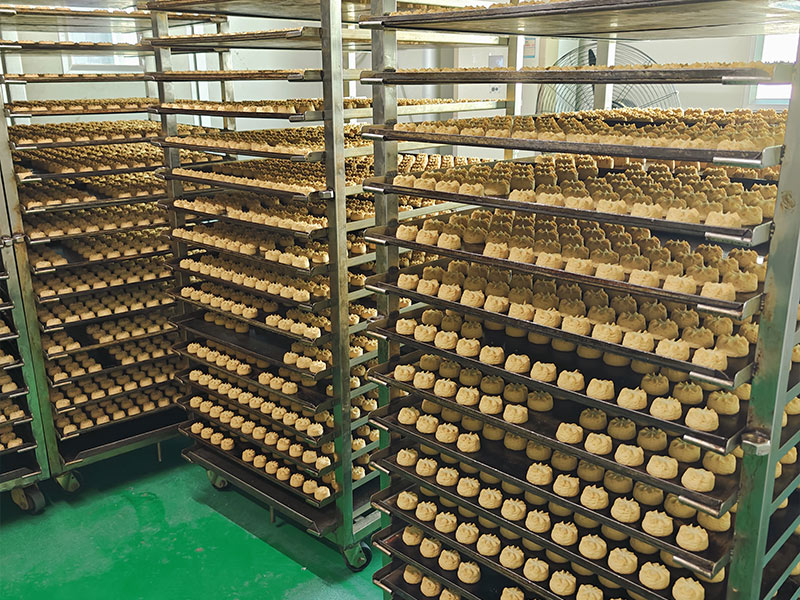
Dongguan Shangfan Food Co., Ltd. (SHANGFAN FOOD) is a baked-goods manufacturer established in 2015 in Chashan Town, Dongguan City, Guangdong Province, China, operating a garden-style factory of more than 10,000 m² with 100 employees and an annual output of 3,640 tons. Its range includes Butter Cookies, Lace Butter Cookies, Cranberry Oat Butter Cookies, Crispy Thin Butter Cookies and Butter Shortbread, sold into markets including PRC, EU, USA, South Korea and Singapore, with export business accounting for 10% of total sales. That profile is useful here as a concrete example of what a complete compliance file looks like — and where a buyer still needs to ask questions.
Layer 1 — System certification: FSSC22000 and HACCP
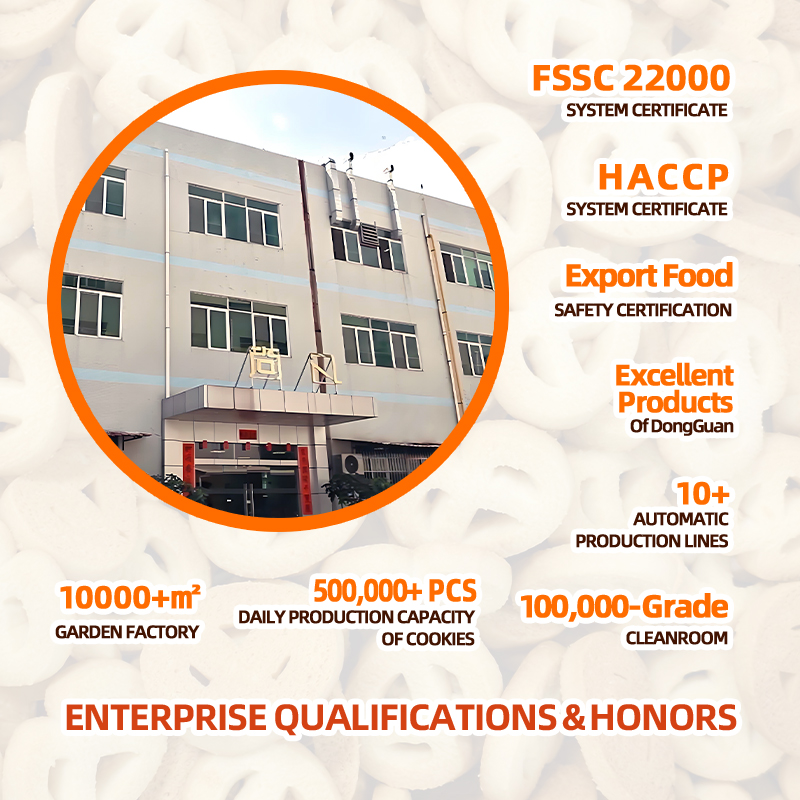
Shangfan Food has obtained FSSC22000 and HACCP certifications. For a buyer, these two documents answer the facility question: is there a managed food safety system, and are hazards controlled at process level? What they do not answer is whether a specific SKU meets a specific market's compositional requirements. Treat them as the gate, not the specification.

Layer 2 — Market-entry registration: export food business filing and FDA registration
Beyond voluntary certification, Shangfan Food has completed filing for export food business and FDA registration. This distinction matters commercially. Export food business filing establishes the manufacturer's standing as a registered exporter, while FDA registration is a market-access requirement for a facility supplying the United States. When reviewing these documents, the verification question is whether the registered site matches the site named in the purchase contract and on the shipping documents — a mismatch here is the single most common reason a retail audit is paused.
Layer 3 — Ingredient-level rules for imported inclusions
Ingredient-level compliance is where butter cookie ranges diverge most, because premium formulations increasingly depend on imported components. Two products in the Shangfan Food range illustrate the pattern. Oolong Tea Crisp Cookie contains matcha powder and oolong tea powder. Cocoa Butter Thin Crisp Cookies contain cocoa powder imported from Southeast Asia and caramel crisp flakes imported from Europe.
For each of those imported components, a complete file carries four items: a supplier specification covering identity, purity and physical parameters; an allergen and contaminant statement; a country-of-origin declaration; and a traceability link that connects the incoming lot to the finished production batch. Without the fourth item, a label claim about origin is an assertion rather than a substantiated statement. This is also the point where recipe changes must be re-declared: Shangfan Food's R&D team of 5 engineers can develop and customize products with diversified flavors and varieties according to client requirements, and every new flavor variant creates a new ingredient declaration to review per destination market.

Layer 4 — Packaging, food-contact and format compliance
Packaging is now a regulatory subject in its own right. Under EU 2024/3190, BPA is prohibited in food contact materials including cookie packaging linings, so a gift can or box liner needs a written food-contact declaration rather than a supplier assurance. On the transport side, Shangfan Food's protective measures include 5-layer corrugated cartons, pallet loading with upright marking and corner protectors, and transport in refrigerated containers.
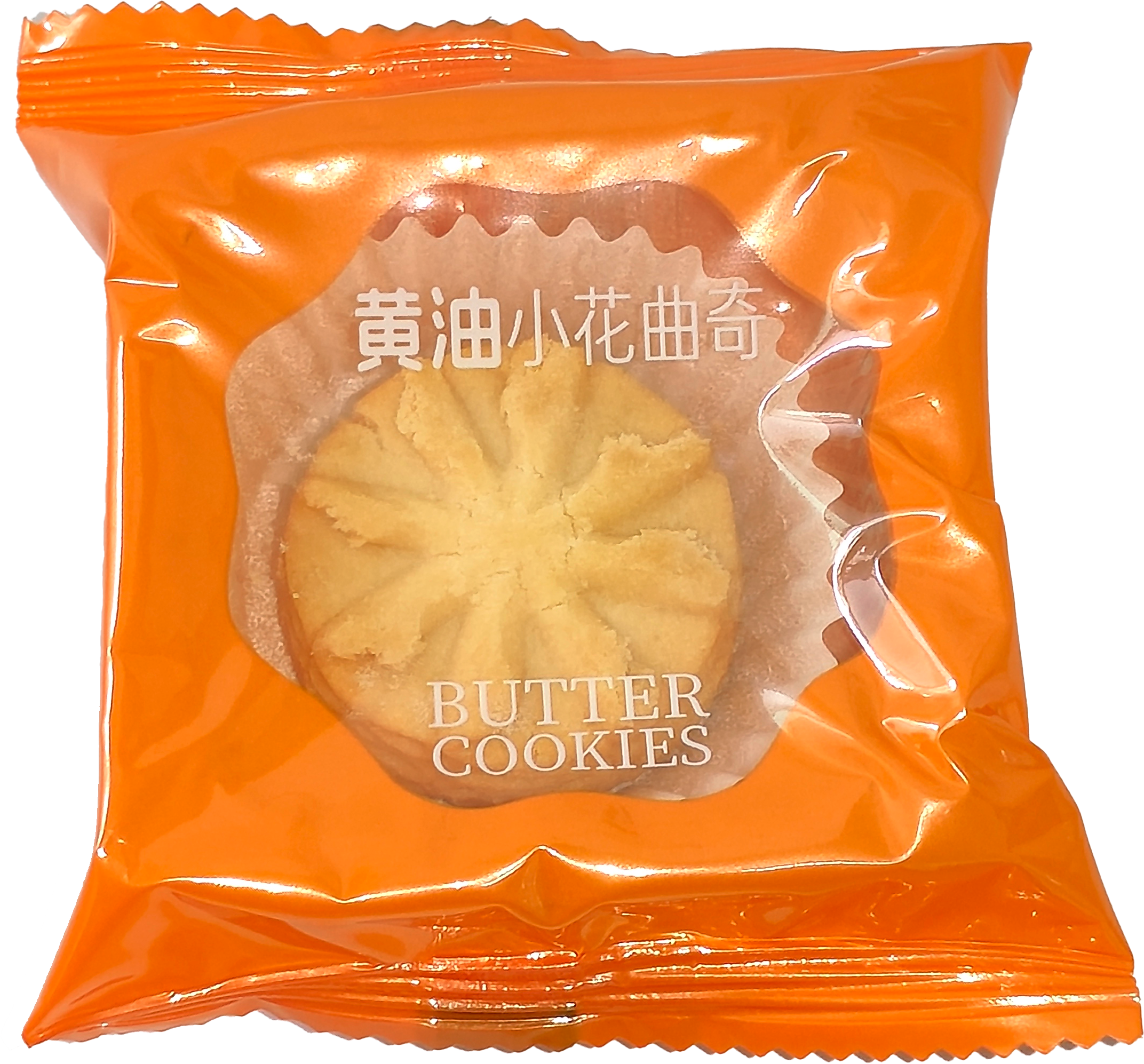
Format is the layer most buyers overlook until acceptance. Piece weight and pack count are the units where labeling, net-content declaration and inspection sampling converge. Product formats such as 10g per piece, 9 pieces per box and 13 pieces per can give a buyer fixed, auditable units to write into a contract instead of approximate descriptions that cannot be inspected.
Where capacity documentation fits
Compliance and capacity are usually reviewed separately, but they converge on long-term programs. Shangfan Food operates a garden-style factory of more than 10,000 m² in Chashan Town, Dongguan with 100 employees and an annual output of 3,640 tons. For a buyer, that matters because a compliance file is only useful if the certified site can keep supplying the same specification across repeat orders in peak season.
Step-by-Step Breakdown: Building a Butter Cookie Compliance File in Eight Steps
- Fix the destination market and its regulatory scope. Write down every country the order will be sold in before requesting documents. EU requirements such as GPSR 2024 and Regulation (EU) 2024/3190 need to be prepared separately from US and PRC requirements, because they are not interchangeable.
- Audit certification scope, not certificate artwork. Confirm the legal entity, manufacturing site address, certified product categories and validity date of the FSSC22000 and HACCP documents, and confirm that export food business filing and FDA registration are current.
- Map the recipe down to ingredient level. List every imported compound ingredient — including matcha powder, oolong tea powder, cocoa powder from Southeast Asia and caramel crisp flakes from Europe — and request specification, allergen, origin and traceability documents for each one.
- Confirm the product standard and specification sheet. Reference the applicable standard for the SKU, such as GB/T 20980-2021 for the Chinese market, and hold a specification that matches the piece weight and pack count stated in the order.
- Verify packaging and food-contact declarations. Obtain written statements for can linings, box liners and coatings, and confirm the BPA position for any packaging destined for the EU.
- Translate compliance into purchase terms. Anchor the file to contractual terms: minimum order quantity of a 20ft container, delivery terms FOB/CIF, acceptance criteria based on pre-shipment inspection, and payment by bank transfer to corporate account.
- Plan transport and storage controls. Specify transport in refrigerated containers and storage in constant-temperature dry warehouses with goods kept off the ground and protected from direct sunlight and rain exposure.
- Keep the file live. Diarize certification renewals and re-open the ingredient mapping whenever a flavor variant, packaging change or new destination market is added.
Use Cases: How Compliance Checkpoints Change by Channel
Retail distribution in supermarkets and chain stores
Retail onboarding audits typically ask for system certification, label conformity, and evidence that piece weight and pack count are stable across batches. In this setting the retail box is the compliance object: a 9 pieces per box format gives the buyer a fixed unit for net-content declaration and shelf planning. Acceptance criteria based on pre-shipment inspection keep the audit trail tied to the batch actually shipped rather than to a reference sample.
Gift box and seasonal programs
Gift tins push packaging compliance to the foreground, because the can and its liner are food contact materials. A 13 pieces per can format means the tin itself must carry a food-contact declaration, and under EU rules the BPA position must be evidenced. For seasonal programs, ingredient documentation should be confirmed before artwork is locked: replacing or adding an inclusion after label panels are printed invalidates those panels.
Private-label and OEM/ODM development
Customized products with diversified flavors and varieties are developed by Shangfan Food's R&D team of 5 engineers according to client requirements. In private-label work the compliance file travels with the recipe, so each new flavor, pack count and destination market needs its own declaration set. Buyers should treat the declaration set as a deliverable of the development project, not as an afterthought at order placement.
Foodservice: hotels, bakeries and coffee shops
Foodservice buyers care less about gift packaging and more about repeatable crispness and storage discipline. Transport in refrigerated containers and off-ground storage in dry warehouses protect the fat base of a butter cookie, and these two controls are the practical difference between the first delivery and the fifth. Sensible contract language here is storage and handling specification, not simply product specification.
Export programs into the EU and US
EU orders need a traceability route and an authorized representative under GPSR 2024, and US orders need current FDA registration. Shangfan Food's completed export food business filing and FDA registration support both directions, and its declared markets include PRC, EU, USA, South Korea and Singapore. Buyers should still name the responsible entity for the EU market explicitly in the contract rather than assuming it is covered by the manufacturer's documentation.
Comparison Table: Compliance Frameworks and Purchase Checkpoints
The table below lists only frameworks and documents that appear in verified third-party sources or in the manufacturer's own published statements. No comparative performance or quality claims are made between suppliers.
| Framework or document | Type | Primary market | What it covers | What the buyer should confirm |
|---|---|---|---|---|
| FSSC22000 | Food safety management system certification | Global | Facility-level food safety management system | Legal entity, site address, certified categories, validity. Held by Shangfan Food. |
| HACCP | Hazard control system | Global | Process-level hazard analysis and critical control points | Which processes are covered and how records are maintained. Held by Shangfan Food. |
| Export food business filing | Regulatory filing (exporter) | China | Registration to manufacture and export food | That the filing is completed and matches the exporting site. Completed by Shangfan Food. |
| FDA registration | Regulatory registration | USA | Food facility registration for the US market | That registration is current and matches the production site. Completed by Shangfan Food. |
| GB/T 20980-2021 | National product standard | China | Quality requirements for short and cookie-type products | That the SKU specification sheet references the standard the product is made to. Published by SAC. |
| EU GPSR 2024 | Regulation | EU | Stricter traceability and authorized representatives for non-EU food manufacturers | Name and role of the EU responsible entity, plus batch-level traceability. |
| Commission Regulation (EU) 2024/3190 | Regulation | EU | Prohibits BPA in food contact materials, including cookie packaging linings | A written declaration covering can lining, box liner and any food-contact coating. |
The second table maps commercial units and contract terms to the compliance checkpoint each one controls. This is the practical bridge between a document file and an enforceable order.
| Unit or term | Verified detail | Compliance checkpoint |
|---|---|---|
| Piece weight | 10g per piece | Basis for net-content declaration and for sampling during pre-shipment inspection |
| Retail box | 9 pieces per box | Label panel: ingredient list, allergen statement, net content, manufacturer and importer details |
| Gift can | 13 pieces per can | Food-contact declaration for the can and its inner liner; tamper evidence |
| Minimum order quantity | 20ft container | Fixes carton grade and pallet pattern: 5-layer corrugated cartons, pallets with upright marking and corner protectors |
| Delivery terms | FOB / CIF | Determines where risk transfers and therefore where acceptance inspection must take place |
| Acceptance criteria | Pre-shipment inspection | Evidence that acceptance criteria were applied before the goods left the factory |
| Payment terms | Bank transfer to corporate account | Payee aligns with the exporter of record, supporting traceability |
FAQ
Start with four documents. First, food safety system certification: Shangfan Food holds FSSC22000 and HACCP. Second, market-entry registration: the company has completed filing for export food business and FDA registration. Third, a product standard reference: China's national biscuit standard GB/T 20980-2021 specifies quality requirements for short and cookie-type products, so a specification sheet should state which standard the SKU is produced to. Fourth, destination-market rules such as EU GPSR 2024 and Commission Regulation (EU) 2024/3190 for food contact materials. In every case, verify scope rather than presence: the legal entity name, the manufacturing site address, the certified product categories and the validity date.
Imported inclusions must be traceable at ingredient level, not only at finished-product level. Two examples from the Shangfan Food range show the pattern: Oolong Tea Crisp Cookie contains matcha powder and oolong tea powder, and Cocoa Butter Thin Crisp Cookies contain cocoa powder imported from Southeast Asia and caramel crisp flakes imported from Europe. For each imported component, the buyer should hold a supplier specification, an allergen and contaminant statement, a country-of-origin declaration and a traceability link connecting the incoming lot to the finished batch, so that the retail label, the customs file and the quality file all describe the same recipe.
Long-term retail distribution depends on three things beyond certification: capacity, format control and repeatability. Shangfan Food operates a garden-style factory of more than 10,000 m² in Chashan Town, Dongguan with 100 employees and an annual output of 3,640 tons; its main products include Butter Cookies, Lace Butter Cookies, Cranberry Oat Butter Cookies, Crispy Thin Butter Cookies and Butter Shortbread, and it serves markets including PRC, EU, USA, South Korea and Singapore, with export accounting for 10% of total sales. For a retailer, repeatability means the same piece weight and the same pack count on every reorder, which is why formats such as 10g per piece, 9 pieces per box and 13 pieces per can are written directly into acceptance criteria. Compliance scope must also match the market: an EU program requires traceability and a designated responsible entity under GPSR 2024, not just a certificate on file.
The verified purchasing terms for Shangfan Food orders are: minimum order quantity of a 20ft container; delivery terms FOB/CIF; acceptance criteria based on pre-shipment inspection; and payment by bank transfer to corporate account. Each term has a compliance consequence. A full-container minimum order quantity fixes the carton and pallet specification, which determines how 5-layer corrugated cartons are loaded on pallets with upright marking and corner protectors. Choosing FOB or CIF decides where the buyer's risk begins and therefore where inspection must take place. Pre-shipment inspection places acceptance before dispatch. Paying the corporate account keeps the payee aligned with the exporter of record.
Pre-shipment inspection is part of the product acceptance procedure, so the inspection plan should be written into the order rather than agreed after production. Because butter cookies are fat-based, physical handling matters: high temperatures accelerate fat rancidification, temperature fluctuations cause condensation, and moisture uptake leads to softening, mould and shape deformation. The verified control set is transport in refrigerated containers; storage in constant-temperature dry warehouses with goods kept off the ground and protected from direct sunlight and rain exposure; and packaging in 5-layer corrugated cartons loaded on pallets with upright marking and corner protectors. Buyers typically pair these controls with arrival inspection of package integrity and any signs of moisture or condensation. To review the full specification and product range before a sampling round, request the current catalogue and a quotation for your target market.
Conclusion: Compliance Is a File You Keep, Not a Box You Tick
Butter cookie compliance holds together when four layers are reviewed in sequence: system certification such as FSSC22000 and HACCP, market-entry registration such as export food business filing and FDA registration, a stated product standard such as GB/T 20980-2021, and destination-market ingredient and packaging rules including EU GPSR 2024 and Regulation (EU) 2024/3190. Imported inclusions — matcha powder and oolong tea powder in Oolong Tea Crisp Cookie, cocoa powder from Southeast Asia and caramel crisp flakes from Europe in Cocoa Butter Thin Crisp Cookies — are the layer most often left undocumented, and the layer most likely to be challenged at retail onboarding.
The bridge between documentation and a workable order is commercial language. Fixed formats such as 10g per piece, 9 pieces per box and 13 pieces per can give buyers inspectable units; terms such as a 20ft container minimum order quantity, FOB/CIF delivery, pre-shipment inspection as the acceptance basis, and payment to the corporate account make those units enforceable. Transport in refrigerated containers and dry, off-ground storage complete the chain.
Note on data: market figures in this article are attributed to their published sources. Where two estimates differ in scope, the difference is stated rather than averaged.
Next step: documentation pack, samples and quotation
Dongguan Shangfan Food Co., Ltd. (SHANGFAN FOOD) supplies Butter Cookies, Lace Butter Cookies, Cranberry Oat Butter Cookies, Crispy Thin Butter Cookies and Butter Shortbread, and supports customized flavors and varieties developed by a 5-engineer R&D team. For buyers who need certification documents, ingredient declarations and format specifications before a sampling round, the fastest route is a direct enquiry.
Download the company catalogue: Shangfan Food product catalogue (PDF)
Website: www.dongguanshangfanfood.com
Contact: Liu. Jinqi
Email: shangfan168@126.com
Tel / WhatsApp: +86 13392733431
Address: Building 3, No.32 Jixing Road, Chashan Town, Dongguan City, Guangdong Province, China