OEM Technical Parameters for Butter Cookie Production: From Dough to Packaging
Date: 2026-09-17 Categories: FAQ Hits: 14
OEM Technical Parameters for Butter Cookie Production: From Dough to Packaging
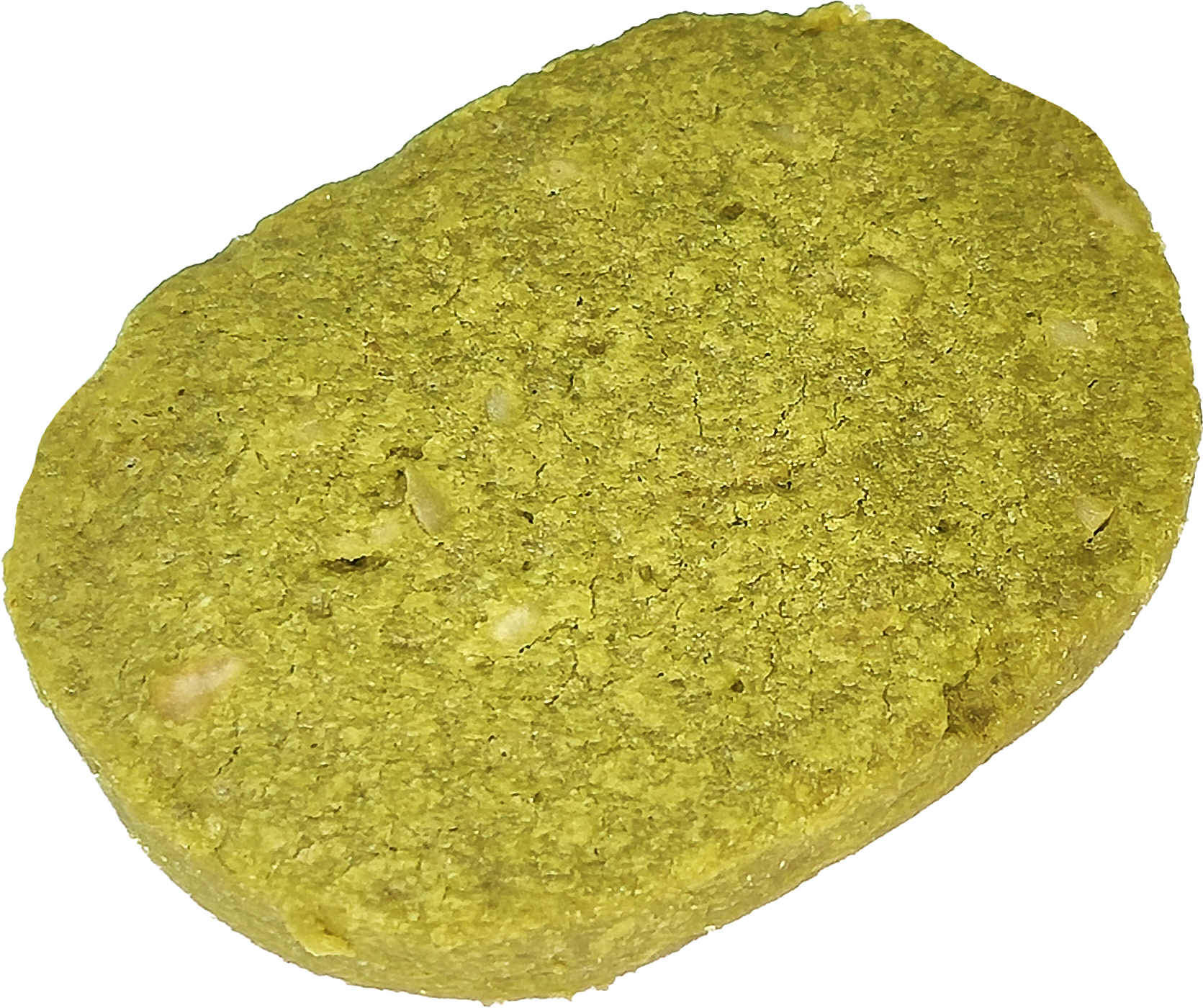
Matcha Nut Butter Thin Crisp Cookies: a 10 g piece format supplied as 9 pieces per box or 13 pieces per can.
A butter cookie OEM programme is decided by four parameter blocks: the ingredient declaration, the net weight of each piece, the number of pieces per box or can, and the way powder inclusions such as oolong tea powder and matcha powder are written into the formulation. When any one of these is left open, the approved sample, the printed label and the carton specification stop agreeing with each other.
This guide is written for procurement and R&D teams evaluating butter cookie contract manufacturing. It walks through the parameters that appear on a butter cookie datasheet — dough composition first, packed carton last — and shows how to verify each one against the manufacturer's own documents before tooling, artwork or carton printing is committed.
Why Butter Cookie Specifications Drift Between Dough and Packed Carton
The most common OEM problem is not a defective product. It is an incomplete parameter set. A buyer receives a flavour name, a product photograph and a general net weight, then discovers during packaging approval that piece weight, pieces per unit and carton configuration were never fixed in writing.
Five specific drift points account for most of the rework seen in butter cookie projects:
- Flavour name versus declared ingredients. A pack may be described as matcha or oolong while the declared ingredient list is copied from a different SKU. In this portfolio, oolong tea powder and matcha powder appear together in the Oolong Tea Crisp Cookie and the Matcha Nut Butter Thin Crisp Cookies — a detail that must be reproduced exactly on artwork.
- Piece weight without a count. Thin crisp SKUs run at 10 g per piece, but the same dough can be packed as 9 pieces per box or 13 pieces per can, producing 90 g and 130 g units from one line.
- Butter content quoted without a source. Butter percentages in this portfolio are not interchangeable: Butter Floral Cookies 175g and Cocoa Butter Cookies 175g declare no less than 39% fermented butter from FrieslandCampina Netherlands, while Coffee Butter Flower, Danish Fancy Butter Cookies 380g and the Danish Assorted Cookie Gift Box declare 32% or more.
- Shelf life assumed to be uniform. Declared shelf life across the range runs from 180 days to 12 months depending on the SKU, not on the category.
- Carton data omitted. Barcodes, tins per carton, carton dimensions and cubic volume determine logistics cost and are frequently missing from the brief.
The correction is procedural rather than commercial. The supplier datasheet becomes the reference document, and the purchase brief is written from that datasheet line by line. Nothing is approved from a marketing page.
What the Butter Cookie Category Looks Like as OEM Demand Shifts
Category data explains why buyers are asking for tighter parameter control. Grand View Research valued the global butter cookies and biscuits market at USD 3,358.3 million in 2024, while Dataintelo estimates the broader butter-based cookies market — including shortbread and sandwich formats — at USD 42.8 billion in 2025. The gap between the two figures is a scope difference, not a contradiction, and buyers should state which definition their volume assumptions use.
Regional weight matters for format planning. Dataintelo puts Asia Pacific at a 34.2% revenue share of the butter cookies market in 2025, which is consistent with the concentration of butter cookie contract manufacturing in the region. On the raw material side, Denmark exported USD 463 million of butter products in 2024 according to OEC, underpinning the prestige attached to the Danish style, while China's butter exports reached USD 18.5 million in 2024. Oat-based snacks, the adjacent category behind oat butter cookies, were valued at USD 22.4 billion in 2024 by Grand View Research.
Two trends push directly on formulation documentation. The clean-label trend favours 100% pure butter cookies and avoids vegetable shortenings, and EU market access now carries additional paperwork: the General Product Safety Regulation (GPSR) 2024 requires stricter traceability and an authorised representative for non-EU food manufacturers, while Commission Regulation (EU) 2024/3190 prohibits Bisphenol A in food contact materials, including cookie packaging linings. China's national biscuit standard GB/T 20980-2021, issued by the Standardization Administration of China, continues to define quality requirements for short and cookie-type products.
Dongguan Shangfan Food Co., Ltd. (brand: SHANGFAN FOOD) is a butter cookie manufacturer established in 2015 in Chashan Town, Dongguan City, Guangdong Province, China. The company operates a garden-style factory covering over 10,000 square metres with 100 staff, an R&D team of 5 engineers and an annual production capacity of 3,640 tons, and holds FSSC22000 and HACCP certification, export food business filing and FDA registration. For an OEM buyer, the practical relevance of that profile is parameter documentation: a plant that produces thin crisp, floral, shortbread, oat and cheese butter cookies at this scale has to run every SKU against a written specification, which is exactly the document a buyer should be verifying.
The Four Parameter Blocks of a Butter Cookie OEM Specification
1. Ingredient Declaration Block
The ingredient list is the first block because everything downstream — allergen review, label artwork, customs documentation — is generated from it. Declared ingredient sets in this portfolio are deliberately short and explicit. Crispy Thin Butter Cookies declare wheat flour, butter, white granulated sugar, almond flakes, crisp flakes and whole eggs; Cocoa Butter Thin Crisp Cookies declare wheat flour, butter, white granulated sugar, crisp flakes, macadamia nuts, cocoa powder and whole egg liquid; Butter Floral Cookies 175g declare butter, wheat flour, starch, icing sugar and salt.
Origin claims are part of this block, not decoration. Where a datasheet names FrieslandCampina fermented butter from the Netherlands, Canadian imported wheat flour, New Zealand natural butter, Dutch block cheese, South African crushed pecans, Australian almond flakes or cocoa powder imported from Southeast Asia, the buyer should require a matching source line for each named material. A claim printed on a pack without a corresponding line in the specification is an unverified claim.
2. Piece Weight and Count Block
This block converts dough into unit economics. Thin crisp products — Crispy Thin Butter Cookies, Cocoa Butter Thin Crisp Cookies, Matcha Nut Butter Thin Crisp Cookies and Oolong Tea Crisp Cookie — are specified as 10 g per piece, with 9 pieces per box (90 g total) or 13 pieces per can (130 g total). Square weights differ sharply by format: Lace Butter Cookies are 16 g per piece at 28 pieces per box for a 448 g pack, and Salted Cheese Butter Cookies are 32 g per piece at 12 pieces per box for 384 g.
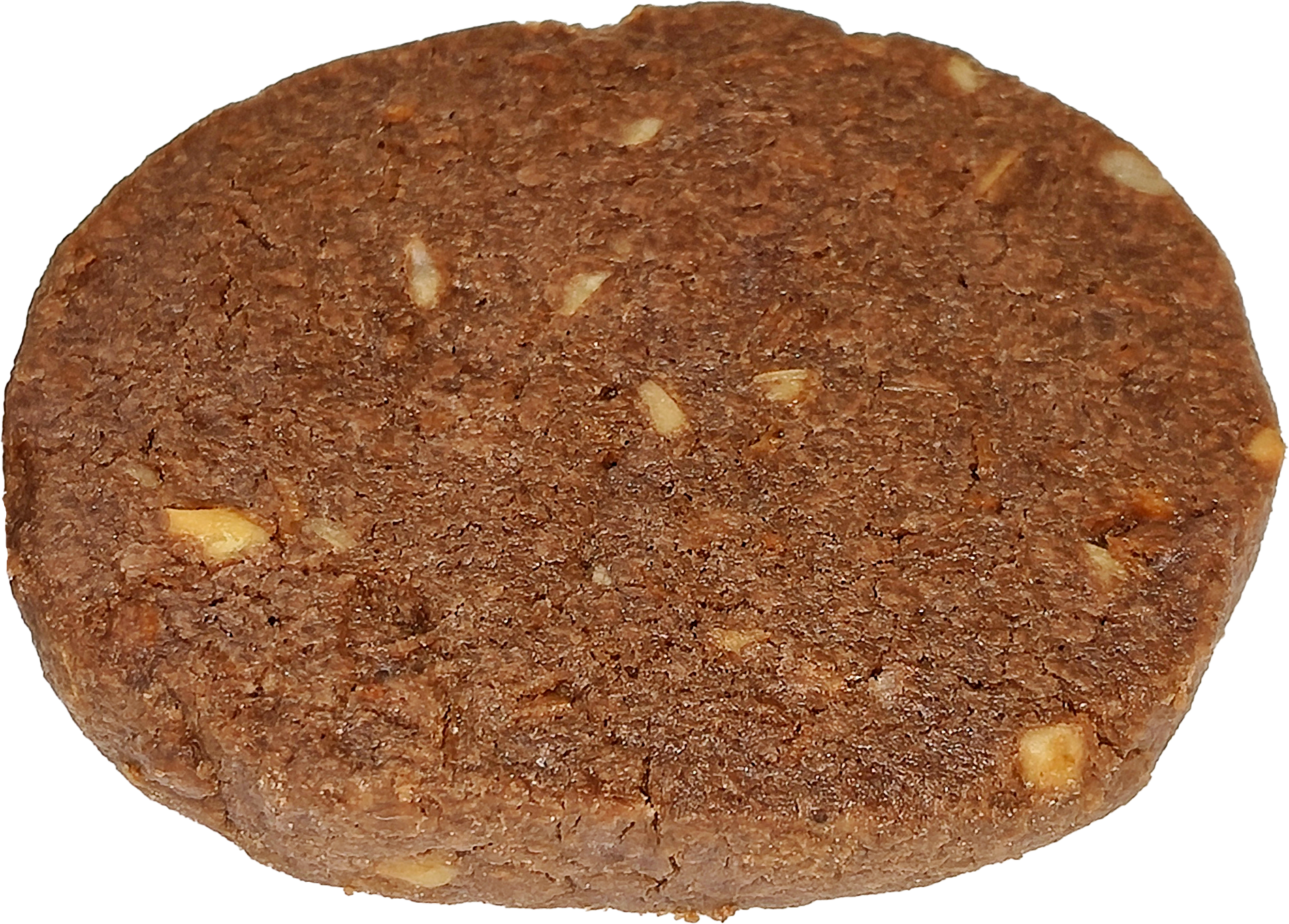
Cocoa Butter Thin Crisp Cookies: European caramel crisp flakes and macadamia nuts in a 10 g piece format.
The rule for buyers is to fix four numbers on one line — piece weight, pieces per unit, net weight per unit, and units per carton. Letting any single element float creates a packaging mismatch that cannot be corrected after the tin or carton is printed.
3. Powder Inclusion Block
Powder inclusions are where formulation and flavour marketing most often separate. In this range, oolong tea powder and matcha powder appear as declared ingredients in both the Oolong Tea Crisp Cookie and the Matcha Nut Butter Thin Crisp Cookies, alongside pecans, whole milk powder and edible salt. Cocoa Butter Thin Crisp Cookies declare cocoa powder, and Coffee Butter Flower declares coffee powder.
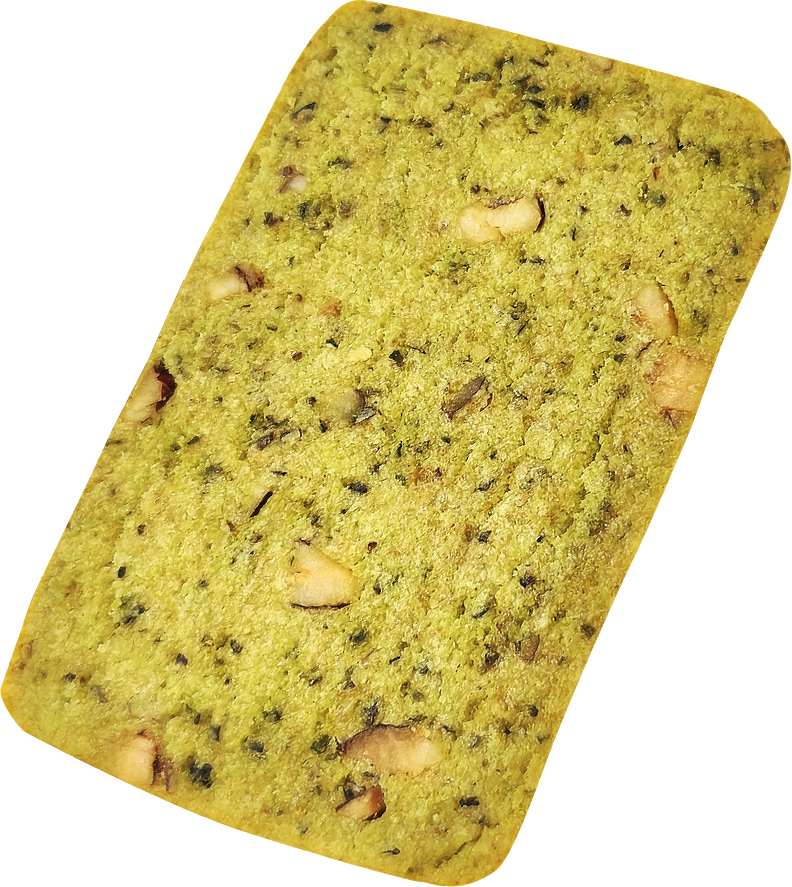
Oolong Tea Crisp Cookie: oolong tea powder and matcha powder are declared ingredients, not only flavour descriptors.
A powder changes two documents at once — the ingredient declaration and the sensory brief. Buyers running a tea-flavoured or matcha-led private label should therefore confirm three things before artwork: the powder appears in the declared ingredient list, the flavour description on pack matches that declaration, and the approved sample delivers the profile the brief requested.
4. Packaging and Carton Block
The final block fixes how the product travels. Tin formats in this range are supplied at 175 g × 24 tins per carton with carton dimensions of 44.8 × 30.2 × 24 cm (0.032 CBM) and barcode 6970066564843 for the original flavour Butter Floral Cookies; the 175 g Cocoa Butter Cookies carries barcode 6970066564836. Danish Fancy Butter Cookies 380g ship at 380 g × 12 tins per carton with a carton size of 61 × 21 × 35.8 cm and barcode 6970066564782, while Butter Floral Cookies 260g ship at 260 g × 8 tins per carton in gift tin packaging matched with gift bags, individually packed for mess-free serving, with barcode 697006656441.
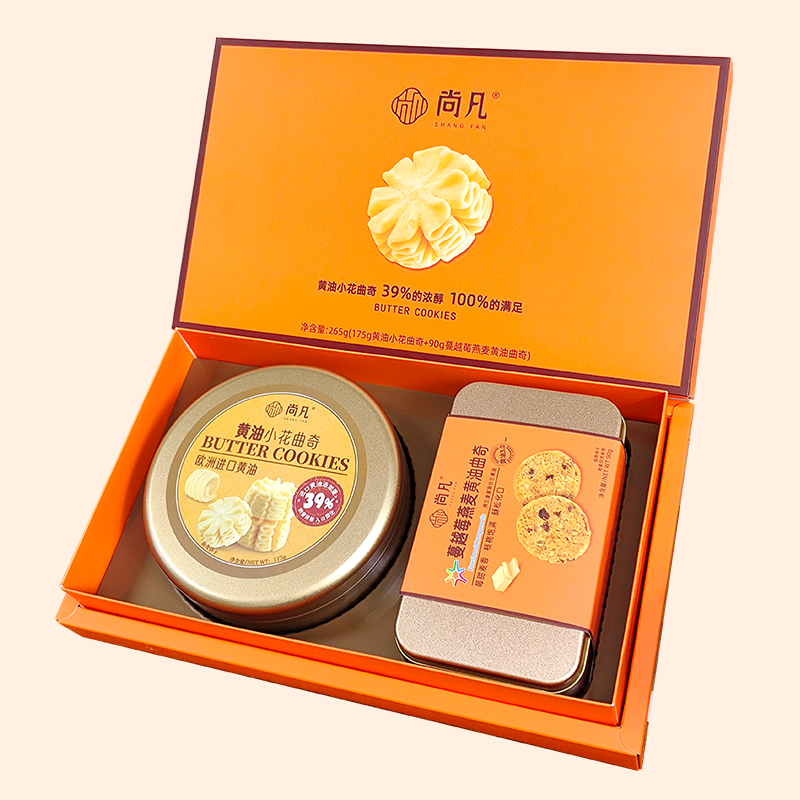
Gift and retail packaging formats must be specified alongside piece weight, count and carton configuration.
Storage instructions belong in this block too. Butter cookies should be kept away from direct sunlight in a cool, well-ventilated place, and packaging must comply with food contact packaging standards, with humidity controlled to prevent the product from softening.
How to Verify a Butter Cookie Formulation Datasheet, Step by Step
The following sequence is designed for a procurement or R&D reviewer working through a supplier datasheet for the first time. Each step produces a written confirmation that can be attached to the purchase brief.
- Lock the ingredient declaration. Transcribe every declared material from the datasheet and mark each origin claim that requires a source line. For a matcha or oolong SKU, confirm that the powder appears as an ingredient rather than only as a flavour name.
- Confirm the butter specification and percentage. Record whether the SKU declares no less than 39% fermented butter from FrieslandCampina Netherlands, 32% or more of the same butter, or natural butter imported from New Zealand at 32% or more. Percentages and sources are SKU-specific.
- Fix piece weight and count. Record piece weight (10 g for thin crisp SKUs), pieces per box (9) and pieces per can (13), or the equivalent figures for the format being sourced, such as 16 g × 28 pieces for Lace Butter Cookies or 32 g × 12 pieces for Salted Cheese Butter Cookies.
- Confirm process notes. Datasheets in this range reference slow whipping for even batter blending, roll moulding for flavour integration, frozen fresh-cut technology, low-temperature baking and slow baking for even heating. These notes define the sample you will receive.
- Record shelf life per SKU. Values range from 180 days for Lace Butter Cookies through 5, 6, 8, 9 and 12 months across the portfolio; they must be matched against the shipment date, not assumed from the category.
- Confirm packaging format and carton data. Capture tin, box, can or gift set format, units per carton, carton dimensions, cubic volume and barcode numbers, plus any gift tin and gift bag pairing.
- Verify standards and market-access documents. Confirm the applicable product standard on the datasheet and, for EU-bound shipments, traceability requirements under GPSR 2024 and food contact compliance under EU 2024/3190.
- Approve the sample against the written parameters. Weigh, count and taste the sample against the same sheet. Sign-off should be against parameters, not against the sample in isolation.
Checklist rule: no parameter leaves the brief as a verbal agreement. If a value does not exist on the datasheet, it does not exist in the programme.

Production documentation runs from dough specification to packed carton on every OEM SKU.
Where These Parameter Blocks Decide the Project
Holiday and festival gift assortments. The Danish Assorted Cookie Gift Box is a 760 g set containing two tins, made with natural butter imported from New Zealand at 32% or more, with no preservatives, artificial pigments or artificial flavours added, and a 9-month shelf life. The Butter Cookie Gift Box is a 265 g box available in two flavours, designed for gifting scenarios during festivals and holidays, with typical application scenarios described as coffee pairing, snacking and afternoon tea. In both cases, net weight and shelf life drive the artwork and the retail listing.
Retail tin programmes. Supermarkets, chain hotels, bakeries, coffee shops, online e-commerce platforms and instant retail platforms are the stated application industries across the range. A 175 g tin programme priced on 24 tins per carton and 0.032 CBM per carton is a logistics calculation before it is a flavour decision.
Tea-pairing thin crisp lines. The 10 g piece with 9 pieces per box or 13 pieces per can allows a brand to run two price points from one formulation. For matcha and oolong SKUs, the powder inclusion carries the differentiation, so the declaration and the flavour copy must be agreed together.
Foodservice and counter service. Salted Cheese Butter Cookies are specified at 32 g per piece and 12 pieces per box for 384 g, with a 12-month shelf life, made with block cheese imported from the Netherlands using slow whipping, frozen fresh-cut technology and slow baking. Piece weight at 32 g suits counter service, where the unit is sold individually rather than by the pack.
Oat and better-for-you ranges. Cranberry Oat Butter Cookies and Dark Chocolate Oat Butter Cookies are both 90 g per box with an 8-month shelf life, made with butter, oatmeal, walnut kernels, whole egg liquid and edible salt. The smaller net weight means carton planning and shelf-life matching carry more weight than in tin formats.
Butter Cookie OEM Format Parameters Compared
The table below consolidates the specification parameters that a buyer should hold in one document. All values are taken from the product specification sheets for these SKUs.
| Product | Piece weight / count | Net weight per unit | Key declared ingredients | Shelf life |
|---|---|---|---|---|
| Crispy Thin Butter Cookies | 10 g per piece; 9 per box or 13 per can | 90 g box / 130 g can | Wheat flour, butter, white granulated sugar, almond flakes, crisp flakes, whole eggs | 5 months |
| Cocoa Butter Thin Crisp Cookies | 10 g per piece; 9 per box or 13 per can | 90 g box / 130 g can | Wheat flour, butter, white granulated sugar, crisp flakes, macadamia nuts, cocoa powder, whole egg liquid | 5 months |
| Matcha Nut Butter Thin Crisp Cookies | 10 g per piece; 9 per box or 13 per can | 90 g box / 130 g can | Wheat flour, butter, white granulated sugar, pecans, whole milk powder, oolong tea powder, matcha powder, edible salt | 5 months |
| Oolong Tea Crisp Cookie | 10 g per piece; 9 per box or 13 per can | 90 g box / 130 g can | Wheat flour, butter, white granulated sugar, pecans, whole milk powder, oolong tea powder, matcha powder, salt | 5 months |
| Butter Floral Cookies 175g | 175 g per tin | 175 g | Butter, wheat flour, starch, icing sugar, salt; no less than 39% FrieslandCampina fermented butter; flour milled from Canadian imported wheat | 5 months |
| Lace Butter Cookies 448g | 16 g per piece; 28 pieces per box | 448 g | Butter, special wheat flour, icing sugar, almond powder, egg yolk liquid, white granulated sugar, salt | 180 days |
| Salted Cheese Butter Cookies 384g | 32 g per piece; 12 pieces per box | 384 g | Block cheese imported from the Netherlands | 12 months |
| Danish Fancy Butter Cookies 380g | 380 g per tin | 380 g | Natural butter imported from New Zealand at 32% or more; no preservatives, artificial pigments or artificial flavours added | 9 months |
| Cranberry Oat Butter Cookies | 90 g per box | 90 g | Butter, oatmeal, gold sand sugar, dried cranberries, walnut kernel, whole egg liquid, edible salt | 8 months |
Read horizontally, the table shows why a single category-level brief is unreliable. Piece weights of 10 g, 16 g and 32 g, net weights of 90 g to 448 g, and shelf lives of 180 days to 12 months coexist inside one manufacturer's butter cookie range.
Frequently Asked Questions
Which product standards and declarations apply to a butter cookie OEM specification?
Three layers typically apply. In China, the national biscuit standard GB/T 20980-2021, issued by the Standardization Administration of China, specifies quality requirements for short and cookie-type products, and individual SKUs may also carry their own product standard code — the Lace Butter Cookies 448g specification lists GB7100. For shipments into the EU, the General Product Safety Regulation (GPSR) 2024 requires stricter traceability and an authorised representative for non-EU food manufacturers, and Commission Regulation (EU) 2024/3190 prohibits Bisphenol A (BPA) in food contact materials, including cookie packaging linings. In addition, every ingredient printed on a label must correspond to an entry on the supplier datasheet, and packaging must comply with food contact packaging standards.
Can powder inclusions such as oolong tea or matcha be specified in a butter cookie formulation?
Yes, and they are already declared in this range. The Oolong Tea Crisp Cookie lists oolong tea powder and matcha powder among its ingredients, and the Matcha Nut Butter Thin Crisp Cookies uses the same powder pair together with pecans, whole milk powder and edible salt. Cocoa Butter Thin Crisp Cookies declare cocoa powder imported from Southeast Asia, and Coffee Butter Flower declares coffee powder. Buyers should confirm that the powder appears both in the declared ingredient list and in the flavour description used on the pack, and that the approved sample matches the intended profile.
Which formulation variables should a buyer price line by line in an OEM quotation?
Four variables carry most of the specification weight. First, the butter line: Butter Floral Cookies 175g and Cocoa Butter Cookies 175g declare no less than 39% fermented butter from FrieslandCampina Netherlands, while Coffee Butter Flower declares 32% or more of the same butter, and Danish Fancy Butter Cookies 380g and the Danish Assorted Cookie Gift Box declare 32% or more of natural butter imported from New Zealand. Second, inclusions: macadamia nuts, pecans, almond flakes, walnut kernels, Dutch block cheese and European caramel crisp flakes are named raw materials in the specifications. Third, piece weight and count. Fourth, packaging and carton format. Asking for each as a separate line keeps later scope changes visible instead of hidden inside one lump figure.
How should a buyer validate a butter cookie sample before mass production?
Validate against the datasheet rather than against memory. Weigh individual pieces against the declared 10 g for thin crisp SKUs, count 9 pieces per box and 13 pieces per can where those formats apply, and confirm that every declared ingredient — including powder inclusions — is present in the formulation. Check the shelf life declared for that SKU, which ranges from 180 days for Lace Butter Cookies through 5 months for thin crisp and 175 g tin products, 6 months for Butter Floral Cookies 260g and Butter Shortbread 680g, 8 months for the 90 g oat SKUs, 9 months for Danish Fancy Butter Cookies 380g and the Danish Assorted Cookie Gift Box, to 12 months for Salted Cheese Butter Cookies 384g. Confirm the process notes that produced the sample, such as slow whipping, roll moulding and precise-temperature baking.
What influences production scheduling and delivery for a butter cookie OEM order?
Scheduling usually follows the number of SKUs and formats rather than one production line. Tin, box, can and gift set formats each require their own artwork, barcode and packaging approval before filling — 175 g × 24 tins per carton, 380 g × 12 tins per carton and 260 g × 8 tins per carton are three different configurations inside this range. Imported raw materials, powder inclusions and custom gift packaging each add a lead item, and the declared shelf life has to be matched against the shipment date, since it varies from 180 days to 12 months depending on the SKU. The practical next step is to send the target format, piece count and inclusion list to the manufacturer and request a sample and quotation against that written specification — SHANGFAN FOOD accepts sample and quotation requests at shangfan168@126.com or on WhatsApp at +86 13392733431.
Conclusion: Parameters First, Artwork Second
Butter cookie contract manufacturing is a documentation discipline before it is a flavour debate. The four blocks covered here — ingredient declaration, piece weight and count, powder inclusions, and packaging and carton data — determine whether a sample can be reproduced, whether a label can be defended and whether a carton can be shipped without renegotiation.
Buyers who apply the eight-step verification sequence to a supplier datasheet will find most disagreements resolved before the first tin is printed. The remaining decisions — which format suits the channel, which piece weight suits the price point, which powder inclusion carries the brand — are commercial choices that only work when the technical parameters underneath them are fixed and traceable.
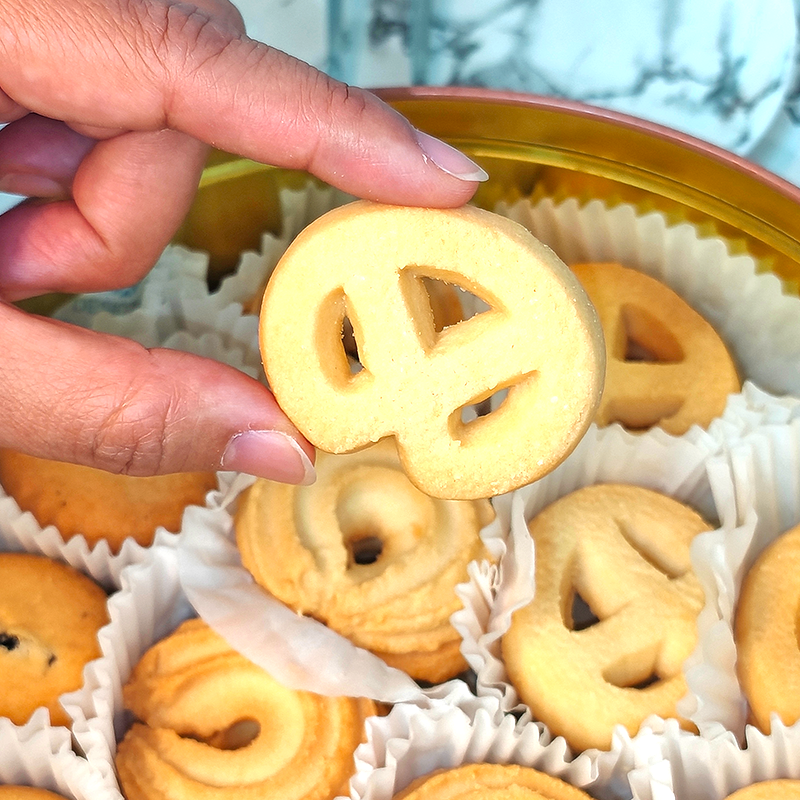
Gift set and tin formats are quoted against a written parameter sheet, not a product photo.
Request a sample, quotation or the SHANGFAN FOOD catalogue
Send your target piece weight, pieces per box or can, inclusion list and packaging format, and Dongguan Shangfan Food Co., Ltd. will return a quotation against that written specification. Product images, carton data and shelf life for each SKU are available on request.
Website: www.dongguanshangfanfood.com | Email: shangfan168@126.com | Tel / WhatsApp: +86 13392733431
Product catalogue (PDF): Download the SHANGFAN FOOD brochure